On This Page
1. What the CCL does
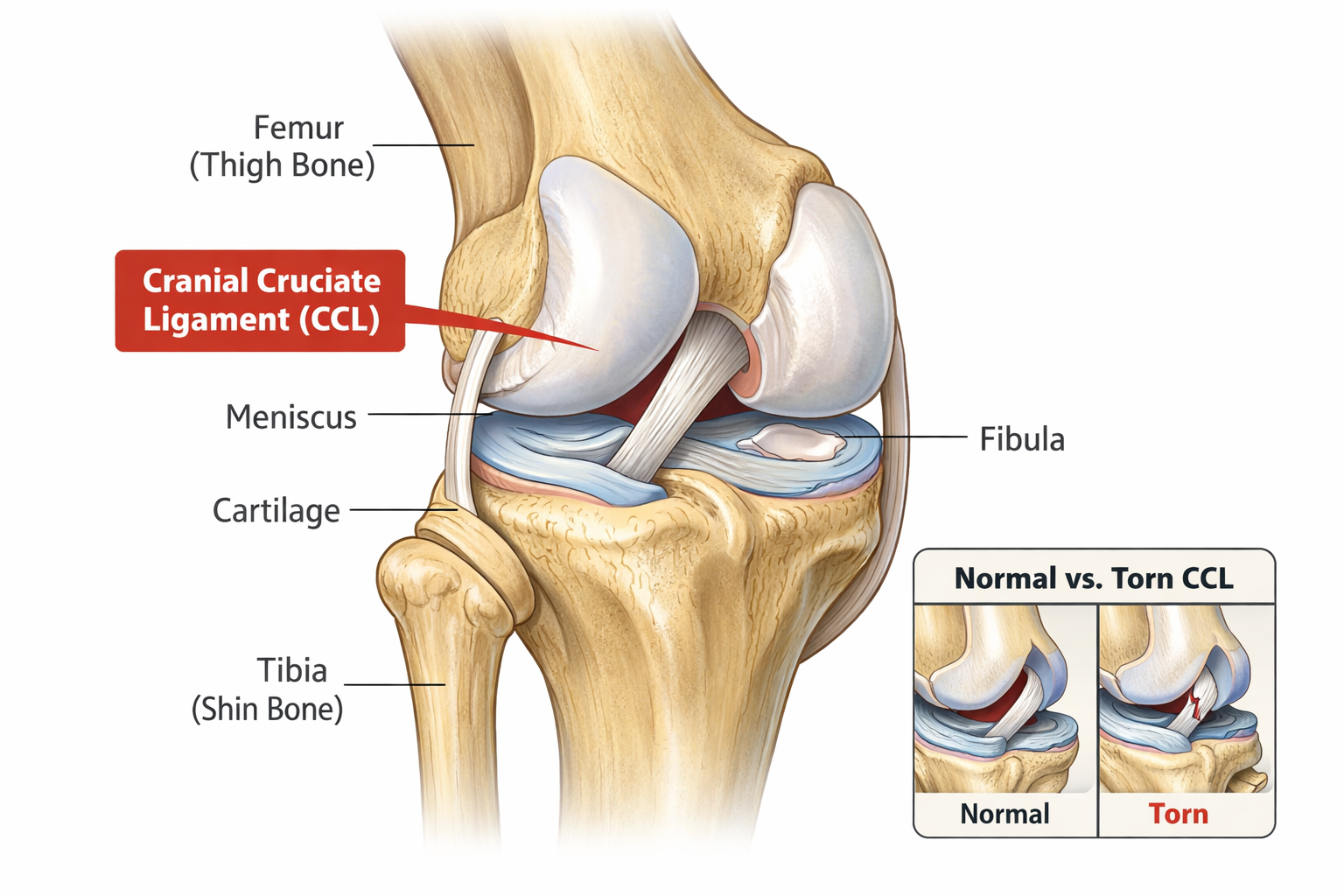
The cranial cruciate ligament (CCL) is a primary stabilizer of the canine knee (stifle). Its main role is to prevent the tibia from sliding forward beneath the femur, limit excessive internal rotation, and maintain proper alignment of the knee during movement. During everyday activities such as walking, running, jumping, or standing up, the CCL helps distribute weight evenly across the joint and keeps motion smooth and controlled. It works together with surrounding muscles, cartilage, and the meniscus to absorb shock and protect the joint surfaces. When the CCL is compromised or torn, the tibia shifts abnormally each time the dog bears weight. This instability leads to pain, inflammation, cartilage wear, and meniscal injury, and over time results in progressive arthritis if left untreated.

2. Why CCL disease happens
Owners often ask, "Did my dog do something to cause this?" Sometimes there is a sudden event, but most commonly the ligament has been weakening over time. Conformation, body weight, genetics, and chronic inflammation all play a role. Once the ligament is weakened, a normal activity like running in the yard can be enough to cause failure.
Even with excellent surgery, the joint has already started an arthritis process. Stabilization improves function and comfort, but long-term joint care still matters.
3. What TPLO is
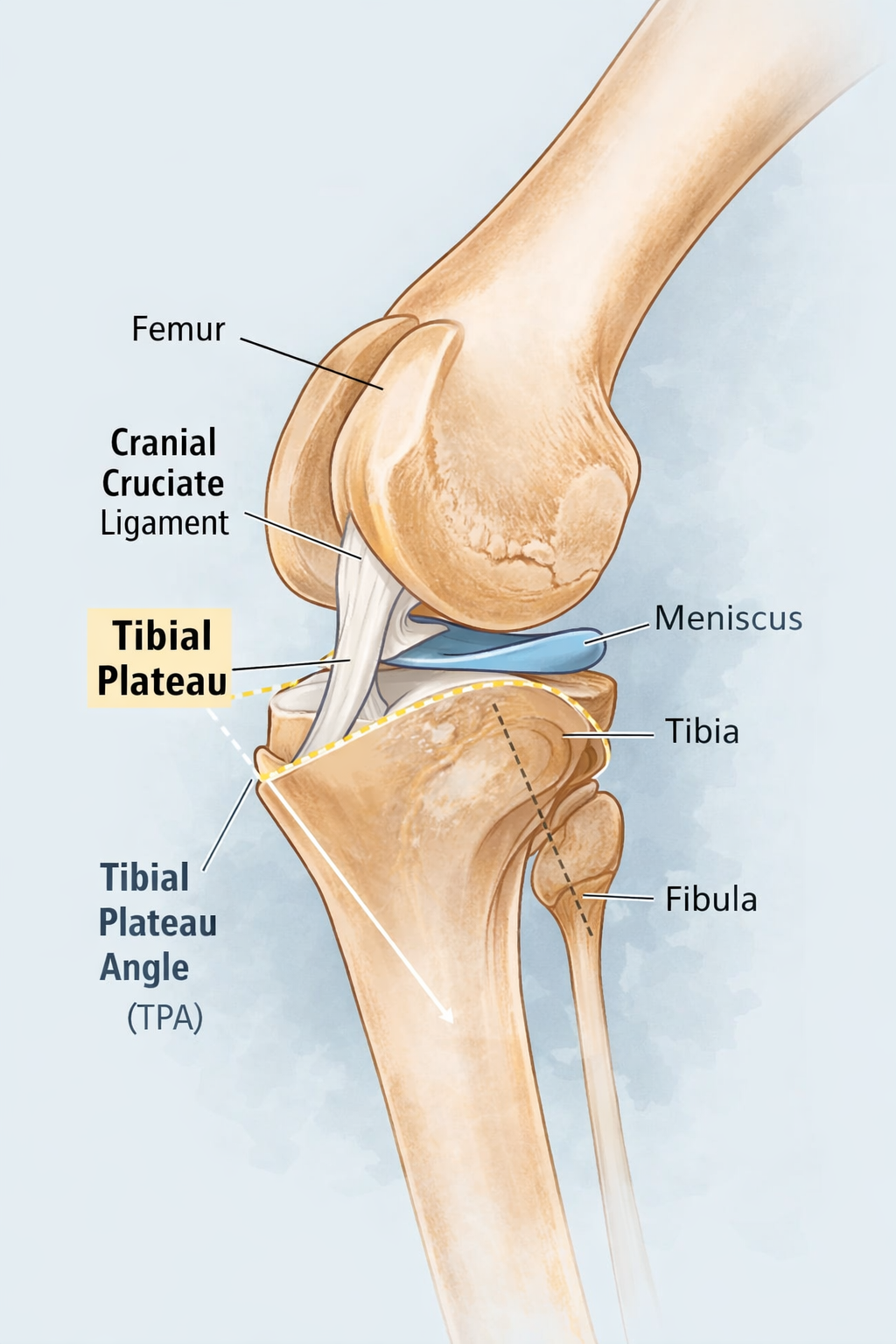
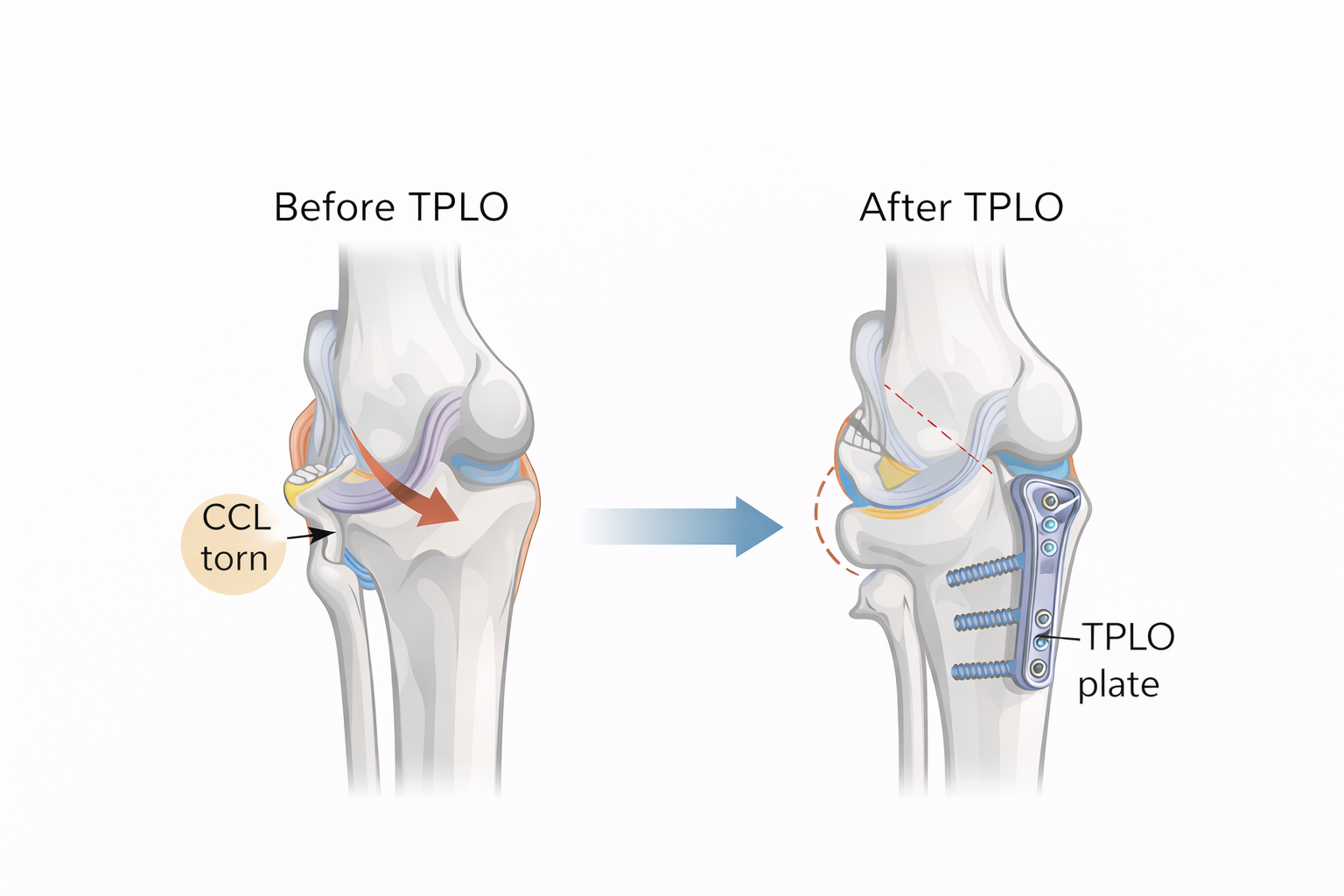
Tibial Plateau Leveling Osteotomy (TPLO) is a surgical procedure designed to stabilize a knee with a damaged or torn cranial cruciate ligament (CCL) by changing the geometry of the tibia. Instead of attempting to replace the CCL, TPLO works by leveling the tibial plateau to eliminate the abnormal forward sliding force that occurs when a dog bears weight on the leg.
By altering this force, the knee becomes stable during normal activity, allowing dogs to walk, run, and bear weight comfortably without relying on the injured ligament. This approach helps reduce pain, restore function, and slow the progression of arthritis over time.
4. How TPLO works biomechanically
In dogs, the top of the tibia has a natural slope. When the CCL is intact, it helps prevent the tibia from sliding forward during weight bearing. When the CCL fails, the femur effectively "pushes" the tibia forward on that slope, creating instability and pain.
TPLO reduces that slope by rotating the tibial plateau. When the slope is reduced, the forward sliding force is minimized, and the knee becomes stable during normal stance and gait.
TPLO in simple steps
- We measure the tibial plateau angle using radiographs.
- We perform a controlled curved cut (osteotomy) in the proximal tibia.
- We rotate the bone segment to the planned angle.
- We secure it with a plate and screws while the bone heals.

5. What happens on surgery day
TPLO is performed under general anesthesia. We manage pain proactively using a multi-modal plan. The knee is assessed for concurrent cartilage and meniscal injury, then the tibia is cut, rotated, and stabilized with a plate and screws.
- Pre-op exam and anesthetic planning
- Imaging review and surgical measurement confirmation
- Meniscus evaluation and treatment if needed
- TPLO rotation and implant fixation
- Post-op comfort plan and discharge instructions
6. Meniscus injuries and why they matter
The meniscus is a cartilage "shock absorber" inside the knee. In CCL disease, meniscal tears are common. If a meniscal tear is present and not addressed, dogs may continue to limp even after the knee is stabilized. This is one reason careful intra-operative assessment is important.
7. Recovery timeline and rehab
Many dogs begin using the leg within days, but that does not mean the bone has healed. The most common reason for delayed healing or setbacks is too much activity too soon.
Comfort-focused care. Short leash walks for elimination only. Strict prevention of jumping and slipping.
Protected healing phase. Leash-only activity. No running, stairs, furniture, or rough play.
Gradual strengthening phase. Activity increases only after recheck guidance and when healing is appropriate.
Return toward normal function with conditioning and ongoing joint support based on your dog's progress.
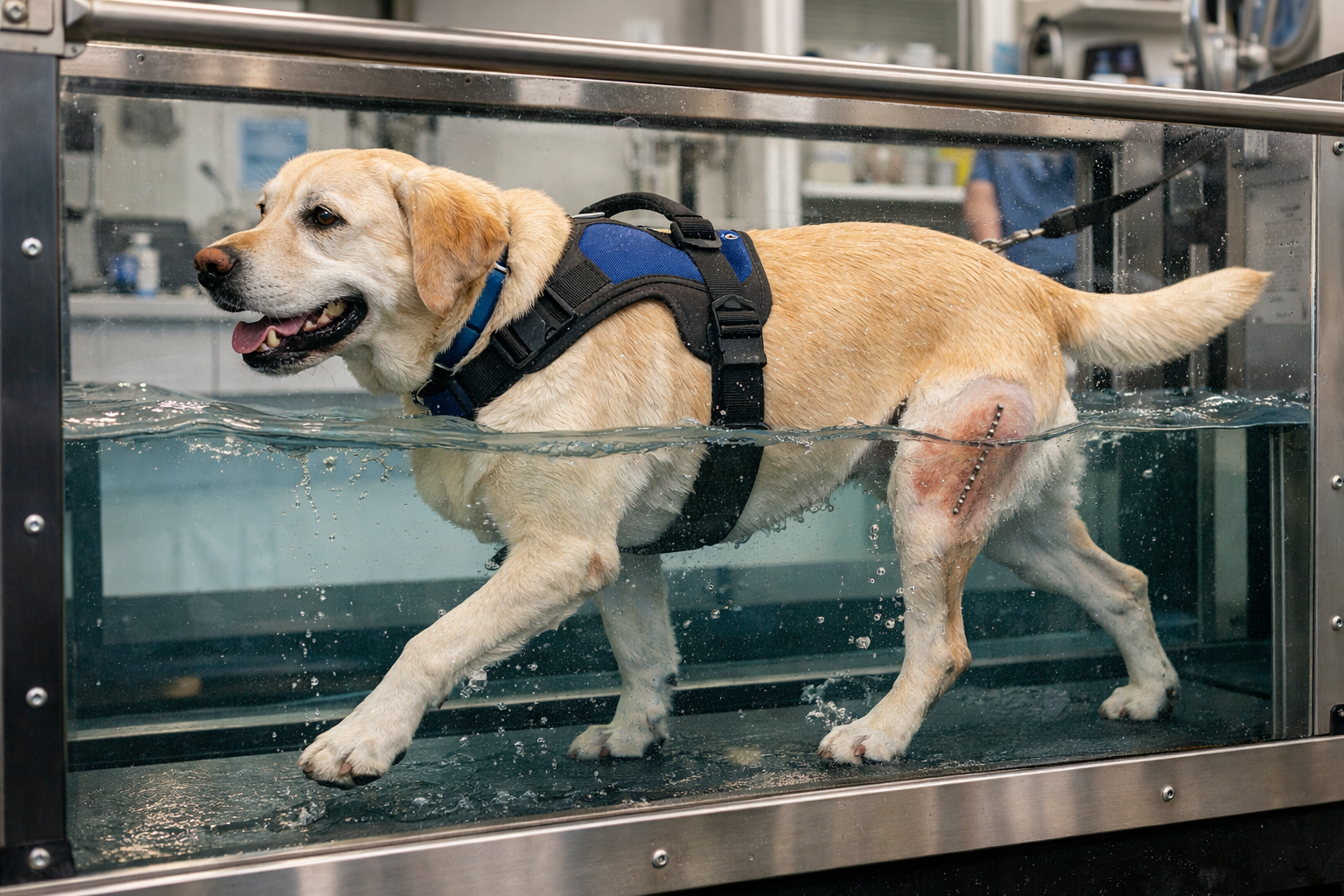
Controlled strengthening and range-of-motion work can improve outcomes, reduce stiffness, and help your dog rebuild muscle symmetry.
8. Home setup checklist
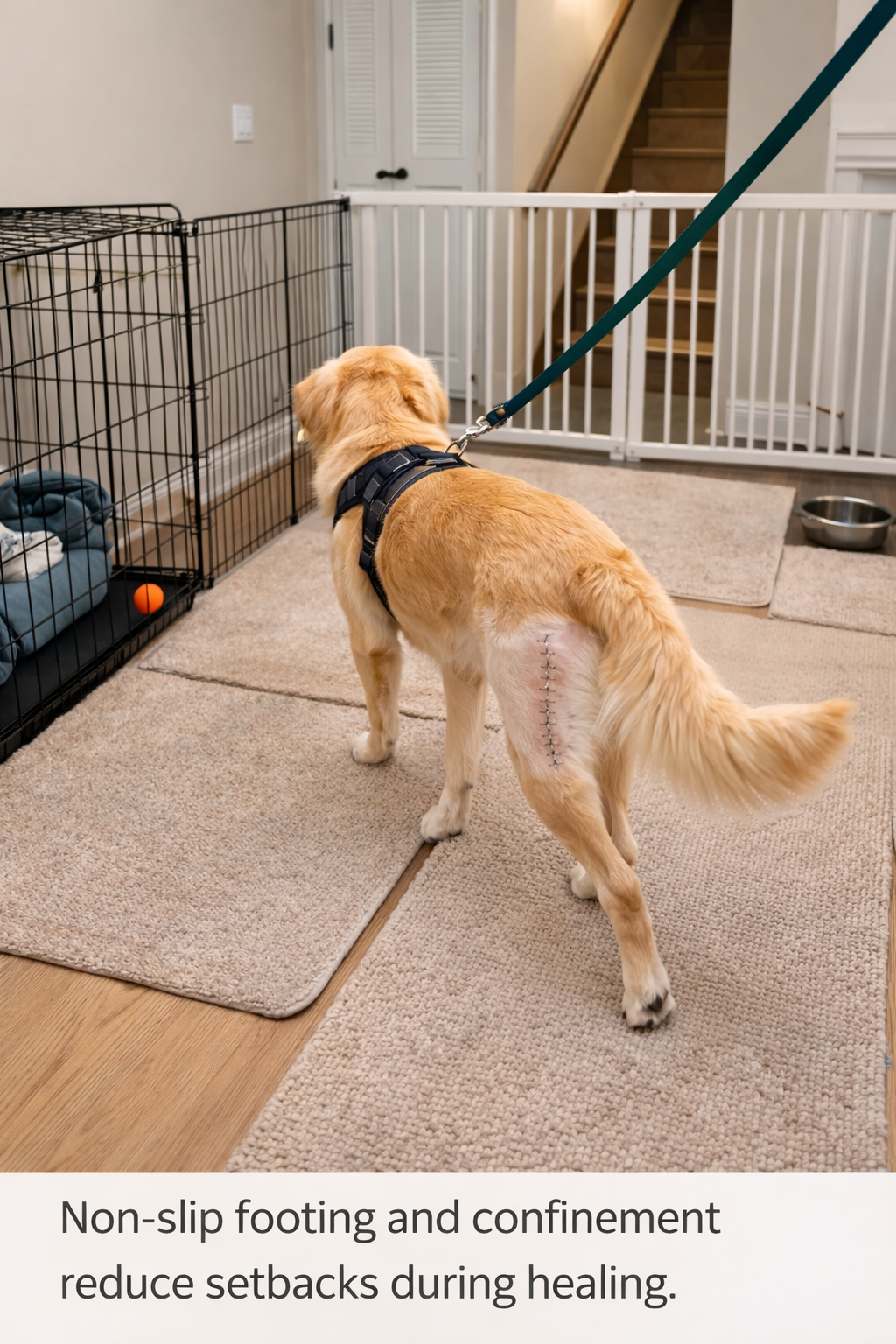
- Use rugs or runners on slick flooring
- Create a confined recovery space (crate or small room)
- Block access to stairs
- Harness + leash for every bathroom break
- Keep activity calm even when your dog feels better
9. Risks and complications
TPLO is a commonly performed procedure with strong outcomes, but complications are possible. Most are uncommon and manageable, especially when identified early.
- Infection or delayed incision healing
- Implant irritation or loosening (uncommon)
- Meniscal injury requiring additional treatment
- Delayed bone healing if restrictions are not followed

10. Life after TPLO
Most dogs return to comfortable, active lives after TPLO. That said, CCL disease is commonly associated with osteoarthritis. Long-term success is strongest when body weight is well-managed and conditioning is maintained.
Stable function and comfort. Many dogs return to running and playing, but "joint maintenance" remains part of long-term care.
11. FAQs
Common questions we receive from pet owners about TPLO surgery and recovery.
How soon will my dog walk normally?
Many dogs use the leg within days, but "normal" gait often improves over weeks as pain decreases, swelling resolves, and muscle strength returns.
Can the other knee rupture too?
Some dogs are at risk of developing CCL disease in the opposite knee over time. Maintaining ideal body weight and following conditioning guidance can help reduce strain.
When should I call the hospital?
Contact your veterinarian if you notice incision discharge, swelling, heat, foul odor, fever, refusal to eat, vomiting, diarrhea, or a sudden worsening of lameness, especially after a slip or jump.
Is TPLO right for your dog?
A hands-on orthopedic exam and radiographs are the best way to confirm the diagnosis and discuss the most appropriate surgical plan for your dog.
Our clinic is located in Hickory Flat, and we welcome TPLO patients from Woodstock, Canton, Milton, Roswell, Alpharetta, and the surrounding Cherokee and Fulton County communities.
Schedule an Evaluation →